A world of biblical knowledge

Authors


 Browse our authors by last name

 A

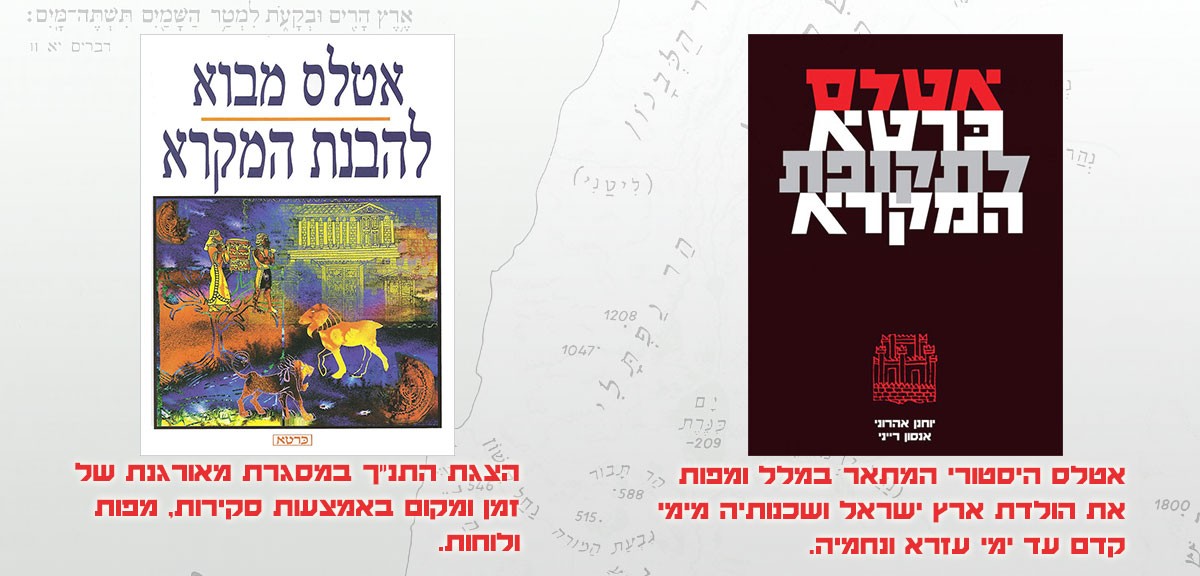
Yohanan Aharoni, Shmuel Ahituv, Azaria Alon, Israel Ariel, Michael Avi-Yonah

B

Dan Bahat, Haim Beinart, Meir Ben-Dov, F. F. Bruce

C

John Kenneth Campbell O.F.M, Rupert L. Chapman III, Mordechai Cogan

D

Sergio DellaPergola, Helga Dudman

E-F

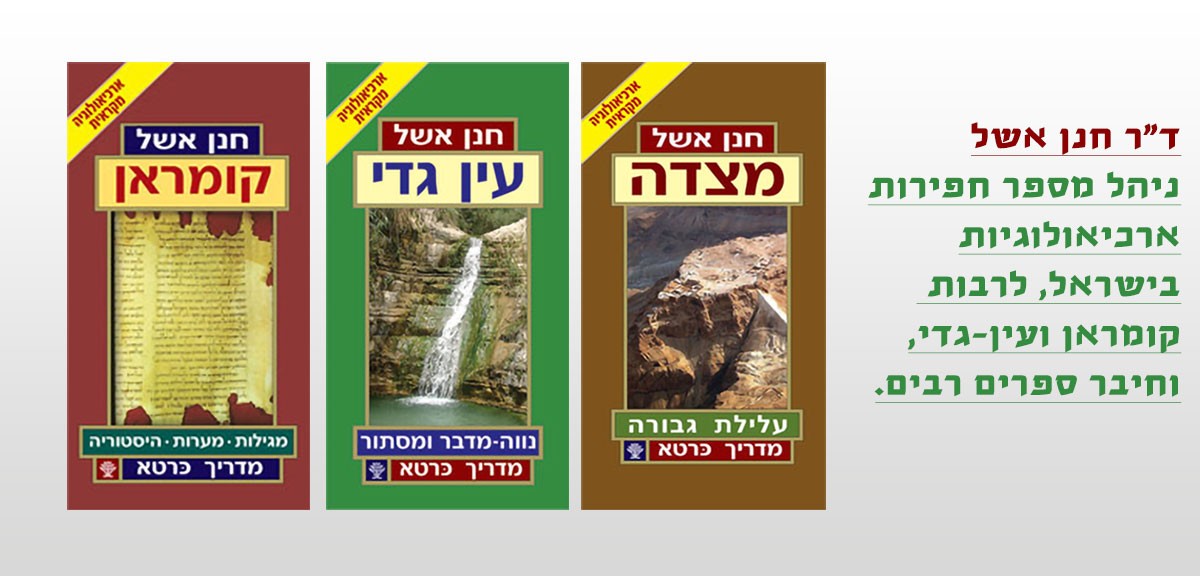
Hanan Eshel, Ellen Feingold, Walter Frankl, G.S.P.Freeman-Grenville, Evyatar Friesel

H-L

Menashe Har-El, Ruth Kark, Shlomo Karni, Ernest Klein, Franklin H. Littell

M-R

Stuart C. Munro-Hay, R. Steven Notley, Anson F. Rainey, Chaim Richman, Kathleen Ritmeyer, Leen Ritmeyer,
Chaim T. Rubinstein

S

Shmuel Safrai, Zeev Safrai, Baruch Sarel, Adin Even-Israel Steinsaltz, Ephraim Stern

T, W, Y

Joan E. Taylor, Paul H. Wright, Ada Yardeni


Yohanan Aharoni (1919–76) was professor of Archaeology, chairman of the Department of Archaeology and Near Eastern Studies, and Chairman of the Institute of Archaeology at Tel Aviv University. He wrote six books, among them The Land of the Bible and The Jews in Their Land, and participated in the discovery of the Bar Kokhba caves while surveying and excavating in the Dead Sea region in 1953.


Shmuel Ahituv
, Ph.D., is emeritus professor of Bible and Ancient Near Eastern Studies at Ben-Gurion University of the Negev. He has written several books and is currently editor of the Be’er Sheva Series of the Department of Bible and Ancient Near Eastern Studies at Ben-Gurion University, editor of Mikra Leyisrael (Bible for Israel) commentary, and editor of the Israel Exploration Journal.

Azaria Alon, Israel’s “Mr. Nature,” was born in 1918 in Wollodarsk, Ukraine, and has lived in Israel since 1925. Since 1938, Azaria has been a member of Kibbutz Beit Hashita. He has been an agricultural worker, a youth movement leader, an educator and teacher of biology. In 1951, he became one of the founders of the Society for the Protection of Nature in Israel (SPNI), which is now a leading power in environmental campaigns in Israel. He took a major part in the campaign to save the wildflowers of Israel (since 1964). He has also been active in creating the Governmental Nature Reserves Authority (a member of its board from 1964 to 1976); mapping the nature reserves and national parks of Israel (1951–1965); numerous campaigns to save the wildlife and environment; General Secretary of SPNI from 1969 to 1977; taking a major part in education, especially in creating the network of Field Study Centers; the editor of SPNI publications; member of Life & Environment; taking part in the Stockholm Convention in 1972 and IUCN conferences from 1963 to 1990. Since 1951, Azaria has been writing, lecturing and broadcasting on conservation of Nature and Environment, in an effort to raise the public consciousness towards those subjects.

Israel Ariel, founder and director of the Temple Institute in Jerusalem, served in the paratrooper brigade which liberated the Temple Mount in the Six-Day War of 1967, and was one of the first soldiers to reach the Mount. He also served as chief rabbi of the IDF Northern Command. Rabbi Ariel is author of the monumental The Treasure of the Holy Temple, a richly illustrated series of seven prayer books, with extensive commentary, one each for the Holy Sabbath, the Daily Prayer, and the five major festivals (all in Hebrew), and The Temple Haggadah.

Michael Avi-Yonah (1904–74) was professor of Archaeology and History of Art at The Hebrew University of Jerusalem. He wrote numerous books and papers, among them In the Time of Rome and Byzantium, The Holy Land: A Historical Geography from the Persian to the Arab Conquest, and Gazetteer of Roman Palestine. He also planned and constructed a model of Second Temple Jerusalem at 1:50 scale, now on display at the Israel Museum, Jerusalem.

Dan Bahat is one of Israel’s leading archaeologists and a senior lecturer at the Land of Israel Studies at Bar-Ilan University. He is also associate professor at the University of St. Michael’s College, University of Toronto. He is an expert on the Temple Mount, Herod’s Palace, and the 1,600-foot tunnel that runs under the western retaining wall of the Temple Mount.
Bahat served as Jerusalem district archaeologist from 1978 to 1990; for a dozen years before that, he was district archaeologist for the Galilee. Bahat has directed digs at Tel Dan, the Beth-Shean synagogue and Herod’s Palace in Jerusalem, among other sites. He has published extensively on the history of Jerusalem, including multiple articles for the Biblical Archaeology Review.

Haim Beinart is emeritus professor of Jewish History of the Middle Ages at The Hebrew University of Jerusalem. He has more than three hundred publications to his credit, almost all of them dealing with the history of the Jews in Spain in the Middle Ages and their subsequent expulsion. He was elected to the Israel Academy of Sciences and Humanities in 1981 and has received many other prizes and honors for his scholarly work. In 1989 he became a Doctor Honoris Causa of the Complutense University of Madrid and in 1992 a Dr. Lit. of the Jewish Theological Seminary, New York. He has held visiting professorships in Bern, London, Lucerne, and Princeton, and a visiting fellowship at Wolfson College, Oxford.

Meir Ben-Dov, archaeologist and historian, has participated in many excavations in the Holy Land and served as a field director for the most important modern excavations in and around the Old City of Jerusalem. He lectures on Roman and Byzantine art and Muslim archaeology at The Hebrew University of Jerusalem and other universities. He is the author of several books, among them In the Shadow of the Temple and Jerusalem, Man and Stone: An Archaeologist’s Personal View of His City.

Frederick Fyvie Bruce (1910-1990) was a Bible scholar, and one of the founders of the modern evangelical understanding of the Bible. He was educated at the University of Aberdeen, Cambridge University and the University of Vienna. After teaching Greek for several years first at the University of Edinburgh and then at the University of Leeds he became head of the Department of Biblical History and Literature at the University of Sheffield in 1947. In 1959 he moved to the University of Manchester where he became professor of Biblical Criticism and Exegesis. In his career he wrote some thirty-three books and served as editor of The Evangelical Quarterly and the Palestine Exploration Quarterly. He retired from teaching in 1978. At different times Bruce was elected as president of the (British) Society for New Testament Studies and the Society for Old Testament Studies. He is one of a handful of scholars thus recognized by his peers in both fields.
He was honored with two scholarly works by his colleagues and former students, one to mark his sixtieth and the other to mark his seventieth birthday. He was elected a Fellow of the British Academy, and served as President of the Society for Old Testament Study, and also as President of the Society for New Testament Study.


Mordechai Cogan
, Ph.D., is professor of Biblical History at The Hebrew University of Jerusalem. He has written widely on the political and cultural connections between ancient Israel and the empires of the ancient Near East. He is the author of many studies and books, among them Imperialism and Religion; commentaries in the Anchor Bible series on 1 Kings; 2 Kings (with Prof. Hayim Tadmor); and commentaries in Hebrew in the Mikra Leyisrael (Bible for Israel) series on Obadiah; Joel; Nahum.

Helga Dudman was born in New York and grew up in San Francisco, graduating from Mills College, California, at age 17½ with a degree in history. After working in postwar Germany (1945–1946) for the U.S. Treasury Department, her jobs in New York and London included advertising, P.R., television commercials, and covering fashion for Vogue magazine. She was a journalist for The Jerusalem Post for over thirty years and authored twelve books.

Hanan Eshel is associate professor and former head (2002–2004) of the Department of Land of Israel Studies and Archaeology at Bar Ilan University. He received his Ph.D. in Jewish History from The Hebrew University of Jerusalem. Among his many honors, he was awarded a Fulbright Fellowship and a Harry Starr Fellowship at Harvard University, and was visiting lecturer in Late Second Temple Judaism at Harvard Divinity School. Dr. Eshel has directed a number of excavation is Israel, including Qumran and Ein Gedi. His publications include The Bar-Kokhba Refuge Caves (Hebrew) and The Dead Sea Scrolls and the Hasmonean State (Grand Rapids 2008), and over 200 articles.


Walter Frankl
had a regular column “Gardener’s Corner” in The Jerusalem Post starting in 1976; it became one of the paper’s most popular features. Born in Vienna in 1906, he developed an early love of sport and nature. In the early 1920s he won the Austrian middle-distance running championship and represented his country in the 1928 Amsterdam Olympics. In 1931 he immigrated to Israel (then Palestine). He studied at the Kadoori Agricultural School at Kfar Tabor, specializing in flower and vegetable growing, greenhouse culture and beekeeping. He was a co-founder of the Jerusalem Horticulture Society and an honorary life-member of “Hatzav” (House Plants Society).

Greville Stewart Parker Freeman-Grenville (1918–2005) was a prolific author, Orientalist, linguist, colonial officer and historian who became an authority on the cultures of Africa and the Middle East. He was vice-president of the Royal Asiatic Society until 2000, and worked with the Palestine Exploration Fund, the British Academy and the Hakluyt Society to promote research and publication in African and Oriental lands. His publications include three works of translations and several atlases. He has been published by both the British Academy and the German Academy.


Menashe Har-El
is emeritus professor of Biblical Archaeology at Tel Aviv University, a researcher of the ancient geography and history of Israel and the Middle East, and formerly a lecturer at the teachers’ seminaries of The Hebrew University of Jerusalem and Tel Aviv University, among others. He has published 13 books on topics related to the Land of Israel, four of which received awards. In 1991, Har-El was the recipient of the Yakir Yerushalaim award for accomplishments in honor of Jerusalem. In 2001, he received the Yigal Allon Prize for acts of pioneering excellence and he was awarded the Israel Prize in 2002 for his research on Eretz Israel.

Ruth Kark, professor of Geography at The Hebrew University of Jerusalem, has done extensive research on settlement in 19th century Palestine, and on Western influences on the Holy Land. She has written several books, including Sephardi Entrepreneurs in Eretz-Israel with Joseph Glass and Jerusalem and Its Environs: Quarters, Neighborhoods and Villages 1800–1948 with Michal Oren-Nordheim. She has also edited The Land That Became Israel: Studies in Historical Geography and The Redemption of the Land of Eretz Israel: Ideology and Practice.

Shlomo Karni, Ph.D., is emeritus professor of Religious Studies at the University of New Mexico, where he taught Biblical Hebrew, Modern Hebrew, and Judaic studies for twenty-seven years. He holds degrees from the Technion (Haifa, Israel), Yale University, and the University of Illinois, Urbana. A past member of the Academy of the Hebrew Language in Jerusalem, he was consulting editor to The First Hebrew Primer: The Adult Beginner’s Path to Biblical Hebrew.

Ernest Klein (1899–1983) was born in Szatmar in the eastern part of the Austro-Hungarian Empire (now Romania). In 1925 he was awarded a Ph.D. from the University of Vienna. His specialized fields were Semitic languages and literature, Romance languages and literature, and Philosophy. In 1931 he became Rabbi of Nove Zamke in the former Czechoslovakia. Here he remained until deported by the Nazis in World War II, first to Auschwitz and later to the concentration camp Allach-Dachau. He was liberated by American troops in 1945; his father, wife, only son and two of his three sisters had perished in the concentration camps. After the Holocaust he returned to his birthplace, but shortly afterwards he went to Paris, and finally moved to Canada in 1951. For the next 20 years Dr. Klein devoted himself to the study of the history of the English language. Since English has roots in some forty spoken and extinct languages, and Klein had mastered these languages, he was uniquely qualified to compile his comprehensive etymological dictionary of the English language — the most exhaustive of its kind. The next ten years of his life he devoted to A Comprehensive Etymological Dictionary of the Hebrew Language for Readers of English.

Franklin H. Littell (1915–2009), a Methodist minister, was emeritus professor of Religion at Temple University in Philadelphia and a longtime adjunct professor at The Hebrew University of Jerusalem. He dedicated his life to Holocaust research after spending nearly 10 years in postwar Germany as chief Protestant religious adviser in the U.S. High Command. He was the author of more than two dozen books, including The Crucifixion of the Jews, The German Phoenix, and Religious Liberties in the Crossfire of Creeds, and more than 1,000 articles.

Stuart C. Munro-Hay (1947–2004) was among the foremost Western authorities on Ethiopian history and culture. He studied for his doctorate at the School of Oriental and African Studies (SOAS) at the University of London, and was a Research Associate at the Centre for African Studies, University of Cambridge. Later he taught archaeology and ancient African history at the universities of Khartoum and Nairobi. He is author and contributor of numerous books and articles specializing in African, Far Eastern and Islamic studies.


R. Steven Notley
is professor of Biblical Studies at the New York City campus of Nyack College. A member and past director of the Jerusalem School of Synoptic Research, Notley received his BA and MA from Oral Roberts University and earned his PhD in Comparative Religions at the Hebrew University of Jerusalem (1993). He studied in Jerusalem under the direction of the late professor David Flusser, writing his dissertation on “The Concept of the Holy Spirit in Jewish Literature of the Second Commonwealth and Pre-Pauline Christianity.” With Flusser he collaborated on the historical biography, Jesus (Jerusalem 1997, 1998, 2001), now: The Sage from Galilee: Rediscovering Jesus’ Genius (Grand Rapids 2007).
He has also completed his English translation of Eusebius, Onomasticon: A Triglott Edition with Notes and Commentary, which has been published together with Ze’ev Safrai’s topographical commentary (Leiden 2005). During his 16 years in Israel, Notley was extensively involved in directing travel and field study for students and laity in Israel, Greece and Turkey.
He served as chairman of the department of New Testament Studies at the American Institute of Holy Land Studies (Jerusalem University College) from 1996 to 2001. He has also edited the collected works, Jerusalem Studies in the Synoptic Gospels (Leiden 2005).


Chaim Richman, who has been associated with the Temple Institute in Jerusalem since 1989, serves as the director of its International Department. Rabbi Richman is the author and translator of a number of books in English about the Holy Temple, including The Holy Temple of Jerusalem, as well as several original works of Torah commentary. He addresses audiences throughout the world on the subject of the Holy Temple and its significance for all mankind.


Anson F. Rainey
, Th.M., Ph.D., is emeritus professor of Ancient Near Eastern Cultures and Semitic Linguistics at Tel Aviv University, where his teaching responsibilities have included Ancient Near Eastern languages such as Ugaritic, Akkadian, Ancient Hebrew, Phoenician and Egyptian. In addition, he has taught Historical Geography of the Land of the Bible. He is also adjunct professor of Historical Geography at Bar Ilan University and at the American Institute for Holy Land Studies. He received his Th.M. in Old Testament studies from the California Baptist Theological Seminary and his Ph.D. in Mediterranean Studies from Brandeis University.
Prof. Rainey is the only living scholar who has personally collated all the Amarna correspondence from Cairo, London, Berlin, Paris, Brussels, New York, Chicago, Istanbul and Moscow. His four-volume work on the hybrid language of the Amarna Letters from Canaan is the only work of its kind and has become a standard reference for all scholars of cuneiform and Northwest Semitic who study and teach those unique epistles. His next major project is the publication of his transcriptions and translations of all the Amarna Letters.


Leen Ritmeyer
, originally from Holland, is an archaeological architect who has participated in all of Jerusalem’s major excavations. He served as chief architect of the Temple Mount Excavations directed by the late Prof. Benjamin Mazar, and later participated in Prof. Nahman Avigad’s Jewish Quarter Excavations in the Old City of Jerusalem. He has also participated in numerous excavations throughout Israel, producing site plans and reconstruction drawings. His work has been published in many journals, magazines and books about Biblical Archaeology and has been shown in eminent museums, including the Israel Museum.
He has lectured widely in Israel, Britain, Ireland, Germany, the U.S., Australia and New Zealand and featured as expert on Jerusalem and the Temple Mount on many TV and radio broadcasts. With a Masters degree in Conservation Studies from the Institute of Advanced Architectural Studies at the University of York and a Ph.D. from the University of Manchester, Ritmeyer taught Biblical Archaeology at the University of Leeds in the U.K. and is associate professor at the College of Archaeology & Biblical History, TSW University in Albuquerque, New Mexico, USA.

Baruch Sarel (1926–1997) was a consummate educator, author, translator and editor in many fields. His English works include the completion of Ernest Klein’s monumental Comprehensive Etymological Dictionary of the Hebrew Language for Readers of English after the author’s passing, and Understanding the Old Testament: An Introductory Atlas to the Hebrew Bible. His last work was A Treasury of Living Latin (Hebrew), all published by Carta.

Ze’ev Safrai, born in Jerusalem in 1948, and an alumnus of The Hebrew University of Jerusalem, is professor in the Martin (Susz) Department of Land of Israel Studies at Bar Ilan University. He has published numerous books and articles on Jewish history, culture and the Land of Israel in the periods of the Second Temple, Mishna and Talmud.

Adin Even-Israel Steinsaltz, one of the most brilliant thinkers of our day, lives and teaches in Jerusalem. He founded the Israel Institute for Talmudic Publications and, among his other many activities and writings, has dedicated himself to the monumental task of translating and interpreting the Babylonian and Jerusalem Talmuds.

Ephraim Stern was born in Haifa in 1934, and graduated from the Hebrew Reali School there. In 1955 he began his studies in the Departments of Archaeology and History of the Jewish People at the Hebrew University of Jerusalem, and completed his Ph.D. with distinction in 1968. Upon receiving his MA. he began teaching in the newly-opened Department of Archaeology at Tel Aviv University, and was among the founders of its Institute of Archaeology. In 1971, Professor Yigael Yadin invited him to return to the Hebrew University to teach at the Institute of Archaeology, where Professor Stern worked until his retirement in 2002. During his many years of scholarly activity, he has specialized in the study of the material culture of three historical periods: the Late First Temple period (Assyrian Age), the Babylonian period and the Persian period. He has likewise extensively studied and written about the material culture of the Phoenicians. Over a period of 46 years Professor Stern participated in numerous archaeological excavations, including the initial excavations at Masada and Hazor, Tel Beer Sheva, Tel Mor and En Gedi. He has also directed numerous excavations, including those at Gilam, Tel Kadesh and Tel Mevorakh. For twenty years he directed the excavations at Tel Dor, one of the major sites in Israel preserving important relics from the Israelite-Phoenician and Northern Sea Peoples’ cultures. Alongside his fieldwork, Professor Stern has engaged in extensive scientific editing. For many years he served as editor of the journal Qadmoniot, published by the Israel Exploration Society, and was co-editor of Cathedra, published by the Yad Ben-Zvi Institute. Professor Stern is editor-in-chief of the four-volume New Encyclopedia of Archaeological Excavations in the Holy Land and has recently completed editing the fifth volume of this work. He has served as member of editorial boards of numerous other important archaeological publications.

Paul H. Wright, born in Illinois and living in Jerusalem since 1997, is the Executive Director of Jerusalem University College/Institute of Holy Land Studies on Mount Zion, Jerusalem. Dr. Wright’s duties as professor of Biblical Historical Geography allow him to participate in extensive on-sight field studies with students throughout Israel and the Middle East. He was awarded his Ph.D. degree in Bible and Ancient Near East from Hebrew Union College, Cincinnati. Dr. Wright has written several books, including Greatness Grace & Glory: Carta’s Atlas of Biblical Biography, Understanding the New Testament and (with M. Har-El) Understanding the Geography of the Bible (all three published by Carta, Jerusalem) and numerous articles.

Ada Yardeni, born and residing in Jerusalem, is a graduate of the Bezalel School of Art, where she received a diploma in graphic arts and calligraphy, and of the Hebrew University of Jerusalem, where she received a PhD in ancient Semitic languages, paleography and epigraphy. She specializes in the study of the Hebrew and Aramaic scripts and in the decipherment and interpretation of ancient inscriptions and documents, including documentary texts from the Judean Desert and the Aramaic documents from Elephantine. She has designed a number of typefaces, one of which bears her name. Dr. Yardeni is one of the world’s leading authorities on ancient Semitic languages, paleography, and epigraphy and has published several books and numerous articles on these subjects.  

     Top of page

Wordpress | Designed by Elegant Themes | Optimized by Agentinteractive | Arranged by Carta Jerusalem | Powered by Harmonylogic