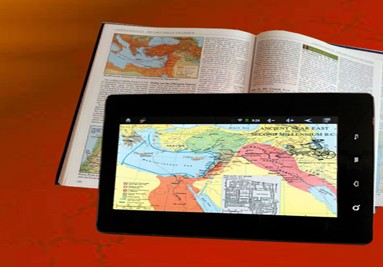
A world of biblical knowledge

Biblical Archaeology and Later Periods


The New Encyclopedia of Archaeological Excavations
in the Holy Land00429

Ephraim Stern, Editor

A monumental reference work of indispensable value.

5 volumes; Hard cover

For full details Click here…   Reviews…   List of Entries…


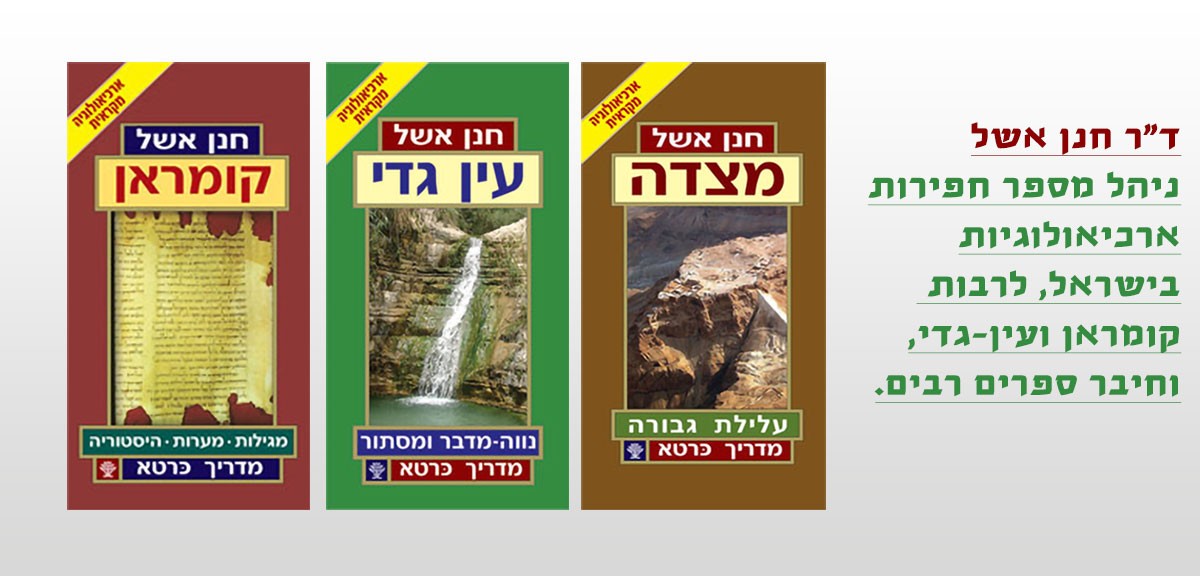
Carta Field Guides

00484Qumran

00488Masada

00489Ein Gedi

For full details Click here…
Contents…   Sample pages…
For full details Click here…
Contents…    Sample pages…
For full details Click here…
Contents…    Sample pages…
All by Hanan Eshel

Archaeological field guides to the 3 most renowned sites along the Dead Sea.

Each: 144 pages, Soft Cover

Reviews

“Many travelers find it hard to deal with tour guides, who tend to think their sense of humor and cloying affability will encourage people to give bigger tips at the end of the trip. Tour guides’ explanations, too, frequently leave something to be desired. At the same time, it is fairly difficult to find travel literature of a high caliber, because why should prominent academics waste their time on writing that does not promote their scientific renown?

“The three field guides that Hanan Eshel has written on Qumran, Masada and Ein Gedi are therefore a welcome contribution. Eshel, of Bar-Ilan University’s Land of Israel studies and archaeology department, is one of the most important archeologists and scholars of the Qumran scrolls. He has spent years conducting research along the west coast of the Dead Sea and has earned a worldwide reputation. His familiarity with the area, particularly with the Dead Sea Scrolls, has led to numerous books and articles that have earned him a prestigious place among scholars of ancient Israel.

“Each of these three books, which Carta has published in both Hebrew and English editions, follows an identical two-part format: The introduction provides an overview of the site, describes the archaeological findings discovered there and explains their significance; that is then followed by a field guide that travelers are meant to take with them as they tour the site. This division is especially helpful for those who wish to forgo a hike in the blazing Dead Sea heat and prefer to learn about these sites in the cool confines of their air-conditioned homes. The introductions are succinct and precise, provide a good sense of each place and its importance, and are accompanied by spectacular photographs and maps.

“The first volume deals with the northernmost site among the three, the Qumran ruins and the adjacent caves. That is where the remains of more than 900 scrolls dating from the Second Temple period (most of them from between 150 B.C.E. and 70 C.E. ) were found (only 20 of them were complete ), a treasure trove that the late archaeologist and politician Yigael Yadin described as ‘the most important discovery found in Israel in the field of the Bible and history of Judaism and Christianity.’ It is an enormous collection that has aroused curiosity not only in scholarly circles but also in the general public. For more than 60 years, thousands of researchers from around the world have been trying to ascertain the nature of this library, which is made up entirely of sacred texts. Who wrote these scrolls, and when? How did they wind up in caves along the desert cliffs, and what exactly was in the ancient remains of the structures excavated at the Qumran ruins? Bible scholars, theologians, linguists and, of course, scholars of Jewish history and archaeologists continue to devote their time to attempting to answer the questions that arise from the findings.

“In the space of a few dozen pages, Eshel has managed to give us a picture of the latest conclusions from the multidisciplinary research on the subject. He is among the vast majority of scholars who maintain that these texts were created by one of the groups of Essenes of the Second Temple period. Some researchers disagree with that contention, and say there is still a great deal of mystery surrounding the identity of the scrolls’ owners and the nature of the Qumran site. Anyone who reads Eshel’s introduction will get a good picture of Qumran and the current state of research (including the disagreements ) into the scrolls found there.”

Most popular destination

“The last stand of the First Roman-Jewish War at Masada, the subject of the second book, has also given rise to speculation, and the final days of the Jewish rebel group of the desert fortress are still shrouded in mystery. Masada is one of the most popular tourist destinations in Israel, drawing large crowds of visitors annually. The vista of cliffs and the impressive dimensions of the place provide a scenic backdrop for the historical tale recounted by Josephus Flavius about the rebels’ tragic end. Readers benefit from Eshel’s description of the scholarly debate over the historical credibility of Josephus’ writings.

“There are other gorgeous sites in the desert, but they are not connected to a dramatic event like the suicide pact Josephus describes.

“The mystery related to Ein Gedi, the subject of the third volume, has to do with the balsam extract produced there. Balsam resin was a rare and valuable commodity in the ancient world, Eshel recounts, and has been mentioned by numerous historians. But all knowledge of the product was lost, and we cannot identify the plant today, nor discover the secret of extracting resin and perfume from it. The ancient balsam tree grew primarily around the Dead Sea and Ein Gedi, as alluded to in an Aramaic inscription discovered at the Ein Gedi synagogue – which states that anyone who reveals the town’s secret to the gentiles shall be uprooted from under the sun. Most scholars presume that the town’s secrets are connected to the balsam crop and perfume extraction.

“While the Qumran caves are less impressive than Masada and Ein Gedi, touring all three sites with Hanan Eshel’s new field guides in hand can enrich your experience immensely.”

– Aya Horesh, deputy editor, in the Haaretz Hebrew Books supplement, December 2009


Echoes from the Past:00485

Hebrew and Cognate Inscriptions from the Biblical Period

Shmuel Ahituv

A collection of over 220 ancient inscriptions that illuminate the different facets of the scribes’ lives.

526 pages, Hard Cover

For full details Click here…   Contents…    Sample pages…


The Raging Torrent:00482

Historical Inscriptions from Assyria and Babylonia Relating to Ancient Israel

Mordechai Cogan

The military encounters between Mesopotamia and ancient Israel are revealed through this comprehensive collection of historical texts

264 pages, Hard Cover

For full details Click here…     Contents…    Sample pages…

Review

“For anyone interested in the history of the ancient Levant in general and biblical, preexilic Israel in particular, during the Iron Age, the Mesopotamian (Assyrian and Babylonian) inscriptions provide one of the most important, if not the primary, source for reconstructing the historical framework of this period.

“The volume under review is an impressive attempt to gather into one accessible volume all the relevant Assyrian and Babylonian inscriptions that relate to early Israel. Based on a handbook for students at Ben-Gurion University in the Negev and the Hebrew University of Jerusalem, subsequently published in a Hebrew edition (M. Cogan, Historical Texts from Assyrian and Babylonia: 9th–6th Centuries BCE [Hebrew] [Biblical Encyclopedia Library 19; Jerusalem: Bialik Institute, 2003), this is an updated and expanded edition that offers students and scholars who do not read Hebrew a very valuable and handy tool for their study and research. This volume is published by Carta publishers in Jerusalem, in the series Carta Handbooks, in which recently another excellent volume has appeared, a collection of Hebrew and cognate inscriptions dating to the Iron Age (S. Ahituv, Echoes from the Past: Hebrew and Cognate Inscriptions from the Biblical Period; Jerusalem: Carta, 2008).

“Following a preface discussing the need and use of such a volume, the author, in his introduction, explains and defines the various types of sources that are included in the volume (such as Assyrian royal inscriptions and Babylonian chronicles), providing a succinct and important overview on this literature. Following the introduction, the volume is organized into chapters in the following order, providing translations and brief discussions of the inscriptions from the following kings and literary genres: (1) Shalmaneser III; (2) Adad-nerari III; (3) Shalmaneser V; (4) Tiglath-pileser III; (5) Sargon II; (6) Sennacherib; (7) Esarhaddon; (8) Ashurbanipal; (9) The Assyrian Eponym Chronicle; (10) Neo-Babylonian Chronicles; (11) Nebuchadnezzar II; (12) Cyrus II, King of Persia. In addition there is an appendix in which the Assyrian royal inscriptions from Israel are discussed, followed by a glossary, chronological tables, and indices.

“The author’s expertise in the field of biblical history in general and Mesopotamian-Levantine contacts specifically gives him all the qualifications to produce an excellent volume. The translations are clear, accessible to people without prior knowledge of Assyriology, and include succinct discussions (save for minor gaps, with up-to-date bibliography) on the various issues that relate to the various inscriptions. The author’s proficiency in Assyriology gives him all the necessary tools for providing these translations and for assessing the viewpoints of various scholars on the issues at hand. While similar collections of inscriptions from the ancient Near East exist …, the combination of having just about all the relevant texts in one handy volume, along with a very focused discussion, turns this volume into such a handy tool for various levels of students and scholars dealing with the Iron Age Levant, biblical Israel, and other related topics.

“… One cannot but praise this extremely handy volume, one that could definitely qualify as a book that should be in every library dealing with Bible, ancient Near East, and cognate studies. It is an extremely useful resource for teaching at different levels, particularly for students who do not have a sufficient control of Akkadian, to serve as a source book on various topics covered in courses from introductory through advanced studies. In addition, it is also of importance as a handy tool for scholars needing quick reference to the relevant Iron Age Mesopotamian texts—without having to handle large and cumbersome volumes of general collections of inscriptions. The author is to be commended for this excellent volume!”

 Aren Maeir, Bar-Ilan University, in RBL 08/2009


 The Illustrated Atlas of Jerusalem00400

Dan Bahat with Chaim T. Rubinstein

The historical and architectural development of the Holy City told through the lavish use of maps, reconstructions, photographs, and more.

152 pages, Hard Cover

For full details Click here…   Contents…     Reviews… 


The Atlas of Biblical Jerusalem00432*

Dan Bahat

Profusely illustrated, this is a masterful rendering of the Holy City in ancient times.

* Excerpted from The Illustrated Atlas of Jerusalem.

48 pages, Soft Cover

For full details Click here…


The Quest:

Revealing the Temple Mount in Jerusalem00478

Leen Ritmeyer

The definitive work on the Temple Mount.

448 pages, Hard Cover

For full details Click here…   Reviews…   Contents…  Sample pages… 


Carta’s Illustrated History of Jerusalem00476

Meir Ben-Dov

A visual, pictorial history from the most ancient records to the most up-to-date excavations.

424 pages, Soft Cover

For full details Click here…   Reviews…   Contents…


Jerusalem in the Year 30 A.D00469

Leen & Kathleen Ritmeyer

See what the city looked like in the time of Jesus.

72 pages, Soft Cover

For full details Click here…   Contents…   Sample pages…


Jerusalem in the Time of Nehemiah00474

Leen & Kathleen Ritmeyer

Follow Nehemiah around the walls of Jerusalem.

72 pages, Soft Cover

For full details Click here…    Contents…   Sample pages…


Carta’s Historical Atlas of Jerusalem00422

Dan Bahat

A concise study of the Holy City through 4,000 years of history

92 pages, Soft Cover

For full details Click here…    Contents…


Top of page

Wordpress | Designed by Elegant Themes | Optimized by Agentinteractive | Arranged by Carta Jerusalem | Powered by Harmonylogic